Empowering Nurses at the Bedside and in Business

Author Archives: Lorie A Brown, R.N., M.N., J.D.

  1. What’s The Verdict?

    Leave a Comment
     

    Last week, the jury returned a verdict in the case of Maya Kowalski.  I have previously written about Maya Kowalski, who was a 10-year-old girl at the at Johns Hopkins All Children’s Hospitals in Tampa, Florida.

    Maya had suffered from Chronic Regional Pain Syndrome (CRPS) and was receiving Ketamine treatments which reduces the sensation of pain even though they cannot stop it all together.  It has been successful for Maya, but she had a very significant flare up which forced her mother, a nurse, Beata Kowalski, to take her to the hospital because severe abdominal pain and vomiting in October of 2016.

    Unfortunately, I believe that the hospital had a rush to judgment in considering and reporting Maya’s parents to DCS with a diagnosis of Munchausen’s Syndrome by proxy (meaning the parents were causing Maya’s illness).  The hospital clearly did not understand what CRPS is.  

    Apparently, they had received her pediatrician’s corroboration and recommendations for CRPS treatment, but they still went ahead and reported her to DCS.  The hospital district felt that Beata was interfering with Maya’s treatment and disagreed with the dosage of ketamine.

    Pediatrician Dr. Sally Smith was also improperly granted access to Maya’s medical record to build a case of child abuse against the family.

    Maya was held in the hospital for 90 days during which time she was surveilled by video for 48 hours and photographed.   None of this was approved of by the parents.  Once custody was given to the hospital, the hospital did what they wanted. Beata became depressed and felt helpless and chose to end her life.

    Now there are allegations of sexual misconduct by a male employee who entered her room and stared at her private parts which he forced her to show.  Criminal charges will be filed. 

    The jury deliberated for 16 hours over three days and concluded that the hospital’s actions led to the mother’s suicide.

    The jury awarded $211 million for false imprisonment of Maya Kowalski, battery of Maya Kowalski, fraudulent billing of Jack Kowalsk, Maya’s father, inflicting emotional distress on Beata Kowalski, wrongful death claim for the estate of Beata Kowalski and intentionally inflicting emotional distress on Maya Kolwalski.  The jury also awarded $50 million in punitive damages.

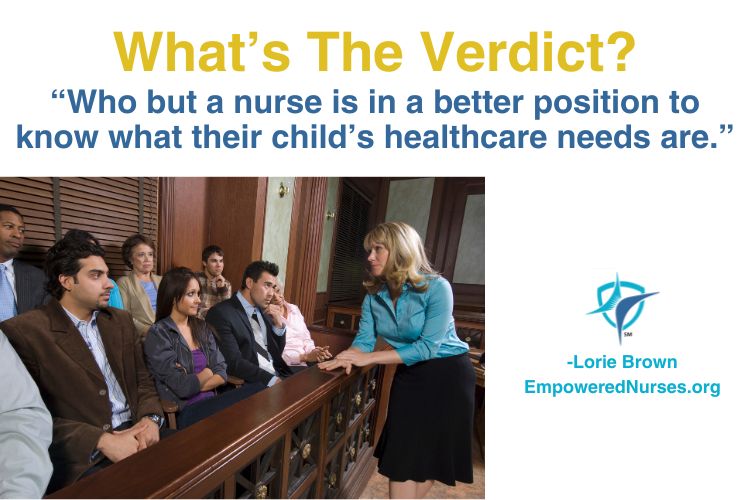
    Prior to trial, the hospital says they are fighting this because they want to make sure that the healthcare providers feel comfortable reporting concerns about Munchausen syndrome by proxy or any other concerns about parental mistreatment of their children.  Who but a nurse is in a better position to know what their child’s healthcare needs are.  

    Unfortunately, Beata’s concerns were not taken seriously, and the nurses thought the mother was harming their child.  Fortunately, the jury saw differently and learned the truth.  

    The sad part about this was at age ten, Maya was isolated in a room, watched on video, and being photographed without the parents’ knowledge or consent.  In fact, Maya could not even talk to her mother.  Maya’s mother became so depressed, fatigued and suffering from an overwhelming sense of helplessness that she couldn’t continue and chose to take her own life. 

    Nothing is going to give Maya back the time that she lost in the hospital and how she was treated, and nothing will bring back her mother.

     It is so sad when there is a rush to judgment like in this case, which turned out to be not true. I am glad that John Hopkins was held accountable.
     

  2. Nurse Retention Initiative

    Leave a Comment


    In a recent article by Becker’s Hospital Review, 6 nursing leaders were interviewed as to what initiatives their hospitals are making to improve patient care and work culture.  According to Margarita Baggett, MSN, RN, Chief Clinical Officer for UC San Diego Health, “the aim is to outperform the previous years when it comes to Nurse sensitive indicators.”  These indicators include such things as prevention of falls, pressure injuries and certain infections.

    Frankly, I do not see how our nurse sensitive indicators will improve nurse satisfaction and thus increase retention.

    The second person was Dina Dent, DNP, RN, Vice President, and Chief Nursing Officer at Inova Health Systems.  She discusses shared governance structure to ensure that every nurse’s voice is heard.

    Just having a nurse at a table does not mean that the nurse’s voice is heard.  Her other initiative is to decrease nurse turnover rate, but she does not say how.  She wants to have nurses practice to the full extent to their license and empower them to be autonomous or empower them with autonomy and resources.

    They have a clinical ladder which now includes a level 5.   Again, I’m not sure how any of these initiatives are going to help decrease nurse turnover and solve the issues in healthcare.

    Brandee Featherman, MSN, RN, and Chief Nursing Officer at Morristown Medical Center believes that the key component to enhancing patient care is to provide support and encouragement for our nursing professionals to reach higher competencies with ongoing professional and career development.  To restate, I am not sure how educating nurses is going to improve patient care and nurse satisfaction, thus improving retention.

    Ryannon Frederick, MSN, RN, Chief Nursing Officer at Mayo Clinic in Rochester, Minnesota, wants to practice transformation to decrease the documentation time and incorporate automation and artificial intelligence, improving communication and introducing new care delivery models such as virtual care.  Nice words, but I can’t say that this is going to solve the problem.

    Joye Gingrich, BSN, RN, Chief Nursing Officer, and Vice President of Patient Care Services at UPMC Harrisburg, Pennsylvania, wants to transition Graduate Services Nurses into professional practice with a clinical ladder offering more opportunities, accelerated growth, greater compensation, and flexible scheduling.

    While I think some of these initiatives may help, it is so interesting that not one of these Nurse Leaders talked about improving staffing ratios.

    The last expert to weigh in is Marybeth Thoburn, BSN, RN, Chief Nursing Officer of Cleveland Clinic Fairview Hospital.  She wants to attend to the emotional needs of caregivers and to implement Code Lavender to support a team that has endured a particularly stressful patient or caregiver event.

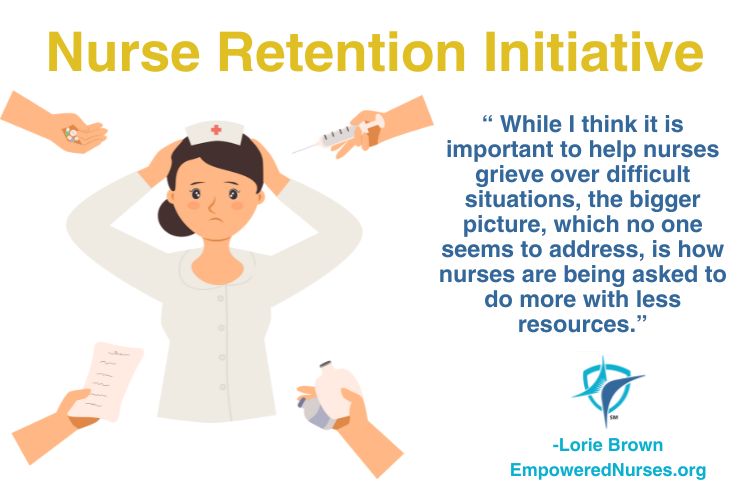
    While I think it is important to help nurses grieve over difficult situations, the bigger picture, which no one seems to address, is how nurses are being asked to do more with less resources.  

    I don’t care the education you provide a nurse because if they don’t have time to take it, it doesn’t do any good.  It will be interesting to see what happens because of these forward-thinking Nurse Leaders.

     I’d love to hear your thoughts on this matter. Please answer in the comments below.


  3. A Nurse’s Last Letter To Her Abuser

    Leave a Comment


    On August 7, 2023, in Dayton, Ohio, Tristin Kate Smith committed suicide!

    The worst part of this story is that Tristin, a 28-year-old ER nurse, accused her abuser, healthcare, as the reason for taking her own life.  She confided in detail in a note found on her computer by her father after her death about how she gave her heart, body, and mind to nursing because she wanted to help others and be a nurse forever.

    But she had heard rumors about healthcare’s abusive past, about the compliments, the pizza, and the thank you letters.  But when she became a nurse, she realized the truth: that healthcare did not support or care for its nurses. She heard the truth when being told about nurses getting hit by patients while emphasizing that she was not to defend herself but just to lay down or to put up her hands and wait for security.

    This is absolutely heart wrenching!  Nurses shouldn’t be abused.  There should be safety protocols in place to prevent these types of situations which happen all too often. 

    Tristin had participated in a survey to improve satisfaction scores but instead of listening to the nurses’ resultant feedback, they were then given an online course and told to “just be friendlier.”  Tristin wrote, “That’s when I began to understand your (healthcare’s) true cruelty and manipulation.”

    Her computer note went on in detail about how healthcare does not protect nurses who are just doing their jobs from criminal prosecution.  In fact, these nurses are thrown under the under the healthcare bus.

    She then states about healthcare “you are a narcissist.  I can see you for what you really are.  You say you care, but you ignore us while we beg on our hands and knees.  You tell us that we put up with so much.  But when we dare to think we are finally going to get the love and support we deserve, we get a pizza party and free pens for the healthcare heroes.”

    It saddens me to hear how true her words ring.  The sad part is that this is not something new or even isolated.  

    When I was practicing in the hospital years ago, I would be given a holiday gift of a ham when they knew I was Jewish! 

    I have also heard about nurses being given rocks and were told to paint the rock with a note of gratitude for Nurses’ Week.

    When you look at every hospital system, at least in my area, I see construction outside of it.  The hospitals are reinvesting their profits into the building and structure rather than reinvesting in the staff that makes them profitable.  When is this going to change?

    My heart breaks for Tristin Kate Smith and what she endured.  I wish she had received the mental health counseling she so badly needed.  Perhaps emergency room nursing was not the right fit for her, but certainly there must be another place.

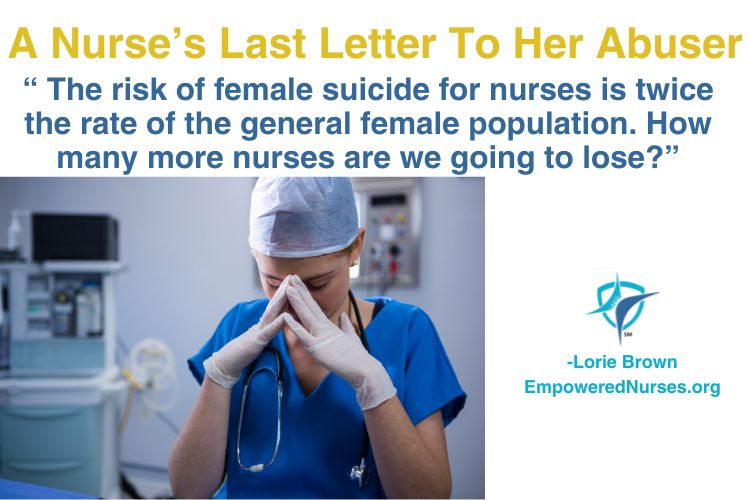
    The risk of female suicide for nurses is twice the rate of the general female population.  How many more nurses are we going to lose? 

    I would love to hear your comments below.

  4. Dare To Dream

    Leave a Comment

    An interview with Stefan, a cruise line nurse from Serbia who reinvented his life, creating the life of his dreams while still being able to practice nursing!

  5. The Tale Of An Evil Nurse

    Leave a Comment

    Lucy Letby, a 33-year-old NICU Nurse in the UK was recently found guilty of murdering 7 babies and trying to kill 6 others over a two-year period.  She killed or injured the infants by injecting air or milk directly into the stomachs of some, 2 were slain with insulin and others had their breathing apparatuses compromised.  And these are only the ones we know about!  A question that remains is just how many other children were victims.

    Police arrested Letby after authorities noticed a spike in infant deaths at the hospital and noticed Letby was on each shift where a questionable infant death occurred.  She denied all the charges despite Police finding a personal note in her home reading “I am evil, I did this,” which police said was “literally a confession.”

    The lengthy trial started in October 2022, and it took 145 days in the UK for the jury to go over all the evidence before deliberating for another 22 days to find Letby guilty of the seven murders and seven charges of attempted murder.

    The convicted murderess was sentenced to life imprisonment with no possibility of parole.  There is no death penalty in the UK, even for such horrific crimes as these.

    Babies are the most vulnerable beings of the human race particularly when they become patients of healthcare providers.  Yet we seem to be at a loss to account for just how this Nurse came to be allowed to care for these infants.

    It is scary when a Nurse, put in a position of such high-level trust, goes off the deep end!

    I guess we will never know why she chose to take these endangering and fatal actions, but the good nurses do protect our patients. Should there be a bad Nurse out there, we need to take any and every step to stop them so that these tragic and horrible events never happen again.

  6. Who Is Maya Kowalski?

    Leave a Comment

    Maya Kowalski, daughter of Registered Nurse Beata Kowalski, was 9 years old in 2015 and suffering debilitating pain.  She was diagnosed with Complex Regional Pain Syndrome (“CRPS”), resulting in symptoms such as stiffness, spasms, and limited mobility.

    Her mother was able to find a doctor who was able to properly diagnose her, and he prescribed ketamine treatments to block the pain receptors in Maya’s body, allowing her body to revise the sensitization process.

    In October 2016, Maya had a horrific flare up of the CRPS and her mother took her to John Hopkins All Children’s Hospital in Florida.  Unfortunately, the hospital concluded that Beata suffered from Munchausen syndrome by proxy in making up fake symptoms for her daughter and chose to report this case to Child Protective Services (“CPS”).

    The hospital kept Maya for 90 days and was videotaping her for 48 hours.  In addition, she was stripped down to her underwear without her family’s permission and photographed.  I cannot imagine what it would be like to be a nine-year-old girl subjected to this and not being able to see or talk to her mother. 

    Beata, having been barred by CPS from seeing or speaking to Maya subsequently became depressed as it certainly caused her stress as well.  Subsequently, after leaving two notes, Beata took her own life!

    The family is suing John Hopkins Hospital for malpractice, asking for $220,000,000.00 and one physician from named in the suit has already settled.

    Meanwhile, the judge has halted the ketamine treatments for Maya as the hospital staff disagreed with Beata’s insistence for the treatments. 

    This trial is currently underway in Tampa, Florida and can be followed on Court TV with excerpts available on YouTube.  There is also a Netflix documentary available titled “Take Care of Maya

    There are always 2 sides to the story which is what makes a lawsuit.  Johns Hopkins claims they had a mandatory duty to report a suspicion of child abuse and blames the state on making the final determination.  The Kowalski’s claim there was a rush to judgment to report and did not contract Maya’s doctor who diagnosed her with CRPS and was treating her with ketamine.

    I would love to hear any thoughts you might have on this matter and welcome you to please note them below.


  7. The Coming Exodus of RN’s

    Leave a Comment


    I feel like I sound like a broken record continually harping on how many registered nurses are expected to leave their careers and how the path will affect mandatory state safe staffing.  Along with previous research, another survey on this subject has been published by the National Council of State Boards of Nursing.  In it, 335,000 registered nurses and licensed practical/vocational nurses surveyed in 2022. 

    That survey found that one in four nurses intended to leave the profession in the next four years.  This is a staggering statistic, especially when we realize that since the COVID pandemic began, about 100,000 registered nurses have already said goodbye to their careers!

    With 25% of our country’s 4.5 million registered nurses expected to quit by 2027 means a potential loss of approximately 1.1 million who will move on to other job opportunities or continue their education to become nurse practitioners.

    The need for nurse practitioners is growing and, according to the U.S. Bureau of Labor Statistics, present projections call for a 38% increase in the need for nurse practitioners between now and 2032.

    Interestingly, many nurses who leave to become nurse practitioners think it will be better for them.  Some want scheduling freedom to do travel nursing or remote nursing.  But the problems in healthcare exist no matter where you work.

    The main culprit for nurses leaving is under staffing.  For the first time ever, centers for Medicare and Medicaid services have proposed new staffing regulations for long term care facilities.  Specifically, it would require facilities to always have a registered nurse on duty and that each patient receives at least 2.5 hours of direct care from a certified nursing assistant.  

    As pointed out to me by a colleague, I do not believe that this regulation took into consideration LPNs/LVNs which are the bulk of staffing in long-term care facilities.  Many say that they would not be able to attract nurses to work in such facilities, which could mean they might be closing their doors.

    The average nurse turnover is between 8.8% and 37%.  It appears that the issue is not necessarily staffing alone but also how the nurses are treated, valued, and respected.  If nurses are continually working short, that leads to burnout and frustration.

    I’m not sure what the answer may be, if any.  I initially tried to help nurses become empowered in their role working for corporate healthcare.  However, I am seeing that I cannot do this alone.  It’s going to take all nurses to stand together to make the needed changes we want to see in healthcare.

  8. What If There Were No Nurses?

    Leave a Comment


    The main reason, or maybe the only reason hospitals exist is for nursing care.  As an intricate tapestry of healthcare, nurses are the threads that bind all of health care together.  They are compassionate caregivers and tireless advocates.  Yes, they are unsung heroes who day and night work diligently to ensure every patient’s well-being.

    Yet what if one day, every … nurse … in … the … world … vanished?

    If all these angels of health disappeared at the same time, what would happen to the fragile balance of health care as we know it?  Would health care even be possible?

    It is questions like this that give me pause to reflect on the profound and unbelievable impact that nurses make every second of the day, all over the world.

    When we enter a hospital, chances are that the first person we see is a nurse.  They reach out, hold our hands when we’re scared, and they are the ones who make us feel human.

    Amid all the medicines, devices, machinery and sterile environments, the essence of health care would change drastically without the presence of nurses.  I know with AI apparently on its way to the forefront, many aspects of care by nurses eventually will be managed by these artificial means.

    Although I believe AI can never replace a nurse’s judgment, its presence will become increasingly prominent.  Nurses are the ones who can catch subtle changes in a patient’s condition; the ones who administer medications and treatment and the ones who tirelessly advocate for the best possible care.  Consider that without nurses, who would be there to hold a patient’s hand both literally and figuratively, during their most vulnerable moments?

     Will there ever come a time where we have a world without nurses?  I certainly hope not.  Yet it is a stark fact that nurses are leaving the profession in droves.  The loss of nurses would have a profound economic consequence.  Health care systems would face increased costs due to inefficiencies; they would pay higher salaries to attract doctors or other health care professionals to fill the voids.  These costs would trickle down to the patients, making health care more expensive and less accessible.

    Nurses play a vital role in preventative care and public health.  If they were not available, what would happen?  The emotional toll of losing nurses would be immeasurable.  Beyond their clinical roles, nurses are the source of hope and comfort for almost everyone.  I am hoping we will never come to that point.

    Thank goodness nurses are the lifeblood of our health care system and the prospect of a world without nurses is incomprehensible.  We must recognize the value of nurses as playing an indispensable role in health care.  And nurses deserve, indeed they must be appreciated.


  9. You Don’t Need to be Perfect

    Leave a Comment


    As nurses, the well-being of our patients depends on our precision and accuracy.  However, when it comes to running our own business, the pursuit of perfection can be a double-edged sword.

    First, is there really such a thing as perfection or are you setting yourself up for an unrealistic expectation?  Remember when we first became nurses and hit the floor?  We were neither competent nor perfect!  We needed the assistance of the mentor to help us through everything. 

    The nice thing about being a business owner is that, unlike with nursing, patient lives are not at stake.  Here is why perfectionism does not work as a business owner. 

    Perfectionism creates an overwhelming pressure, you’re no longer caring for patients but, instead, you are managing finances, marketing, operations and more.  Trying to excel in every area simultaneously can lead to anxiety and a quick burnout.

    You’re not going to be good at all these areas from the get-go.  It takes time just like your first day as a nurse when you were acquiring your nursing “sea legs.”

    Perfectionism does not work because it slows down your progress.  When you are a perfectionist, you don’t readily take action because you want to make sure that it’s perfect!  Perfectionism is a place to hide and keeps you small, so you never actually get your business off the ground.

    As a perfectionist, there is a fear of failure where, “If I don’t get it perfect, I may fail!”  Yet, there are no failures in business; there are only learning experiences.  Setbacks along the way are valuable learning opportunities which help you grow and improve.

    Perfectionism can stifle creativity and innovation.  As nursing is an evidence-based practice, however, with business, many approaches may work with some may work better than others.  But when you’re a perfectionist, your creativity can be repressed.

    Being a perfectionist can blur the boundaries between work and personal life because you tend to overwork to make sure that it is perfect.  This may lead to burnout and affect your health.

    As perfectionists, we set unrealistic expectations not only for ourselves but also set high standards that can negatively impact our team and our customer relationships.  You might appear unapproachable and overly critical.  Clients need to know, like, and trust you before they hire you.  Therefore, being authentic and transparent is much more endearing than trying to hold yourself to an unattainable standard of perfection. 

    As a perfectionist, you can also miss opportunities because as a business owner, there is some degree of risk and fear of imperfection holding you back.  As a nurse business owner, we are always lifelong learners.  Embracing imperfection encourages the mindset of continuous learning and adaptation.

    It is profoundly important to find joy and fulfillment in your work.  Perfectionism is “a thief of joy” and can adversely impact your journey as a nurse business owner.  Therefore, while perfectionism may have its place in healthcare, it doesn’t necessarily translate to the world of nursing entrepreneurship. 

    Embracing imperfection does not mean compromising on quality or professionalism.  Instead, it means allowing yourself the grace to learn, adapt and grow without the relentless pursuit of being perfect.

    Strive to be perfectly imperfect.  By doing so, you can build a successful nursing business that thrives while nurturing your own well-being and satisfaction along the way.  Remember, you are not just a nurse, you are a nurse business owner. 

    And that journey is beautiful in its imperfection.


  10. CEO Salaries Soar Into The Stratosphere

    Leave a Comment


    Were you aware that the CEO of Children’s Hospital of Philadelphia was paid $7,700,000.00 in 2021?  And got a bonus of $5,600,000.00 to boot?  That’s more than the hospital had provided in all charity offerings over the previous three years!

    That package averaged to over a quarter million ($256,000.00) a week; almost $6,400.00 an hour!

    When I first heard of Madeline Bell’s mind blowing salary, I was like, “Oh my gosh, this is crazy!”

    I was glad to learn that Ms. Bell is a nurse and as such would be able to command such a high salary, but I’m hoping she remembers where she came from and uses her position to support and honor her nurses.

    Remember the days when healthcare was the responsibility of a community, and we took care of our own in those small community hospitals?  Now healthcare has become “corporatized” with multiple facilities throughout the country.

    Consider:

    1. When CEOs command such huge salaries, it sends a message that profit is more important than patient care, eroding the ethical foundation of the healthcare system.

    2. The staggering salaries of healthcare CEOs divert resources from where they’re needed to improve medical infrastructure, hire more healthcare professionals, invest in research, and make healthcare services more affordable and accessible to all.

    3. With the escalating cost of health care, is it fair and just for CEOs to command such high salaries?  These salaries trickle down to patients in the form of higher fees and insurance premiums.

    4. If you know the salary of your CEO as a frontline healthcare worker, how do you feel?  These huge salaries affect staff morale and retention.

    5. The compensation structures for healthcare CEOs ties earnings to financial performance, again putting profits over patients.

    6. When healthcare CEOs make such huge salaries, it can erode the public trust and raise questions about the facilities’ commitments to its admission to providing healthcare services for the community benefits.

    7. When high CEO salaries can be seen as diverting resources away from initiatives that could address broader healthcare disparities and social determinants of health.

    Therefore, while I am pleased that a nurse like Ms. Bell is at the helm at Children’s Hospital of Philadelphia, commanding such a fantastic salary, other CEOs, mostly male, are commanding even bigger payments!

    It’s time to equalize the playing field between men and women and between CEOs and staff.  I am not saying that CEOs don’t deserve to be compensated, but maybe put back $5,000,000.00 into the nurses’ pockets?

     I’d love to hear your thoughts on this and invite you to please leave a comment below.

As Seen On:

Women's Week