In Augusta, Maine, that state has promulgated legislation called the Maine Quality Care Act which sets enforceable nurse to patient ratios in many hospitals. The bill unfortunately does not include long-term care facilities where it seems many of the problems occur.
However, it will cover acute care and psych hospitals as well as freestanding emergency departments and ambulatory surgical facilities. This should provide some relief for many nurses.
The legislation, which passed the state’s Labor and Housing Committee, focused to not only protect patients and nurses, but to bring nurses back to the bedside. Should the legislature enact this measure, Maine would be only the second state in the country with this safe staffing legislation following California which was the first in 1999.
Studies have shown that mandated RN to patient ratios improved patient care and decreased patient mortality as well as decreased complications and medical errors. Safe staffing also helps recruit and retain nurses.
However, the legislation is attracting fierce criticism from the Maine Hospital Association (“MHA”). The first point in their press release states is that the initiative will “Cost well over $100 million dollars”. Clearly the hospitals are concerned about increasing their costs rather than improving the quality of care.
The MHA claims also that there will be limited access to hospital care if hospitals cannot meet the minimum staffing ratios and will strip nurses of autonomy and flexibility by stating that the units are based on the condition of patients and the skill and experience of the nurses.
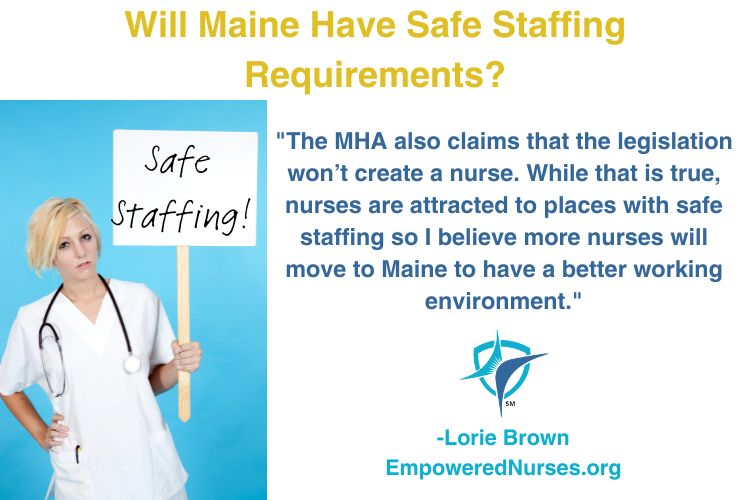
This legislation will not change that. It’s just requiring mandatory minimum staffing, but staffing can flex up as needed. The MHA also claims that the legislation won’t create a nurse. While that is true, nurses are attracted to places with safe staffing so I believe more nurses will move to Maine to have a better working environment.
The MHA’s main concern is that it will not improve healthcare quality. But that is not true according to research. Quality is improved when staffing is improved.
Additionally, they claim it won’t help recruitment and retention, to which I also disagree. I think many nurses are interested in traveling to California because of the safe staffing ratios and I believe the same would be true of Maine.
What do you think about mandatory minimum staffing ratios. Please let me know in the comments.
Did you know that nurses’ honor guards pay tribute to nurses at the time of their deaths? They give the nurse a Nightingale Tribute at the funeral or memorial service.
The nurses who participate in the Nurses Honor Guard dress in the traditional white uniform complete with cap and cape. The ceremony is brief, usually taking only a few brief minutes.
The Nightingale Tribute is a recitation of the late nurse’s name three times after which a triangle is struck to ring out after each call.
As nurses, our identity is tied with our career. For a nurse to be honored in this fashion is so beautiful.
The Nightingale Tribute was copyrighted by Dwayne Jaeger RN, MSN and says, “[e.g., Nurse Smith] was there when a calling, quiet presence was all that was needed, Nurse Smith was there in the excitement and miracle of birth, or in the mystery and loss of life, Nurse Smith was there.
When a silent glance could uplift a patient, a family member, or friend, Nurse Smith was there.
At those times when the unexplainable needed to be explained, Nurse Smith was there.
When the situation demanded a swift foot and a sharp mind, Nurse Smith was there.
When a gentle touch, a firm push or an approaching word was needed, Nurse Smith was there.
In choosing the best one from a family’s ‘thank you’ box of chocolates, Nurse Smith was there.
To witness humanity — its beauty in good times and bad, without judgment, Nurse Smith was there.
To embrace the woes of the world willingly and offer hope, Nurse Smith was there and now that it is time to be at the greater one’s side, Nurse Smith was there.”
Many nurses are starting their own Nurse Honor Guard. If you would like to honor nurses in your area, this sounds like an amazing opportunity to make a difference and honor them.
If you are interested in starting a Nurses Honor Guard, contact Julie Murphy at jmury581@gmail.com. I first heard about the Nurses Honor Guard while on a cruise sponsored by Show Me Your Stethoscope, the largest online group for nurses.
Along with learning about the Nightingale Tribute, I had an amazing time on that cruise and met some amazing and truly brilliant nurses. I learned so much in the process.
So, what are your thoughts about a Nurses Honor Guard? Please feel free to post your reactions in the comments below.
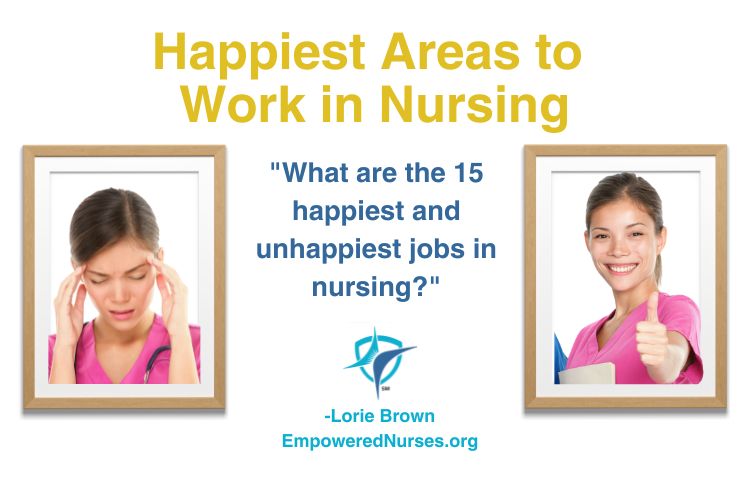
Interestingly, Beckers Hospital Review just published its 2023 rankings on an educational resource site called Nursing Process. The survey determined the 15 happiest and unhappiest jobs for nurses.
I was surprised to see that nursing’s number 1 unhappiest job is the school nurse. This is so interesting because as a school nurse, being surrounded by youngsters all day would seem to be enjoyable. However, I once worked for an agency that assigned me to different places all the time. And, personally I did not like being a school nurse.
Guess what was number 5 on the list? Legal nurse consultant!
When I looked over the unhappiest jobs, they tended to correlate with the Nursing Board complaints. Although I have had very few school nurse cases, number 2 on the list was hospital staff nurse followed by emergency room nurse as number 3. Also, at number 10 on the list was nursing home RN and at number 14 hospice nurse.
I thought, most nurses I speak to who do hospice care love it! But, then again, hospital staff nurse, emergency room nurse and home health nurse seemed to have the highest number of Board matters.
Nursing home nurses are also on the unhappy list and again many of them seem to have accusations against their licenses.
I also looked at this list to see how it might correlate with malpractice claims. I know nursing home litigation is very big these days, primarily due to lack of staff. Another big area of malpractice claims is in obstetrics, but I do not see obstetric nurses on the list of 15 happiest or unhappiest jobs.
What do you think? What area do you work in and, are you happy or unhappy with your job?
Last summer, an 81-year-old man admitted to a Lexington, Kentucky hospital and died within 48 hours later. He had a GI bleed in which he was ordered GoLytely which is a bowel prep for colonoscopy but instead, the nurse gave Naturalyte, a dialysis liquid not intended for human consumption.
According to the Kentucky Board of Nursing, no charges were filed against the nurse for this medication error. In addition, I do not believe criminal charges were filed either. The Board, believing many process failures and system issues were involved, did not feel that charges against license of the nurse were warranted.
After treating another patient several days earlier, the dialysis team left the liquid behind on the ICU floor.
Nurses scan barcodes on patients’ wrist bands and then scan the medication they are about to administer. Unfortunately, the container of Naturalyte would not scan and when the nurse called the pharmacy, rather than sending the proper medication or coming up to see the liquid in question, the pharmacy just sent a label to the ICU floor through the hospital’s pneumatic tube system.
The nurse administered eight ounces of Naturalyte which she believed to be GoLytely before her shift ended. The patient was unable to tolerate the liquid and after the nurse left for the evening, a second nurse gave the patient the remainder of the bottle’s liquid through a feeding tube. The medication mix up was caught at about midnight, but the patient died the next morning.
This is so sad. That night, while the patient was being transferred to their hospital, 3 ICU nurses were pulled to work on another unit that night. The nurse who took care of this patient took him on as her third patient.
It is unfortunate that this terrible mistake was made and that the Barcode system wasn’t working which contributed to the nurse failing to scan the liquid to be alerted to the use of the wrong medication. The nurse should have done her Five Rights and known it was the wrong medication.
It’s interesting how one state north of Tennessee views things completely differently as in the Radonda Vaught case. The nurses involved in this Kentucky death did not face criminal charges or have trouble with the Nursing board. It would be nice if there was some consistency with neighboring states, if not the entire country.
So, I’m somewhat relieved that the nurses in the Kentucky medical error matter did not get charged criminally or face a challenge to their nursing licensing. That does not negate the loss.
When I began legal nurse consulting, I was surprised just how easy it was. I was simply using my existing nursing knowledge and sharing it with attorneys to help them with their cases.
I used to say to myself, “I can’t believe that they actually pay me for this.” Now I understand how important it is to get paid for your valuable work and not to give it away for free.
Now, in the beginning I felt like an impostor saying to myself, “Who am I to get paid for doing this?” But I came to realize that when I was a baby, I didn’t feel like an impostor, I didn’t feel like a fraud. But as we age, we do begin to feel like frauds or impostors.
We say to ourselves things like. “Who am I to have this business? Who am I to charge this kind of money?” But I say, “Who are you not to?” Playing small does not serve anyone. You have important knowledge to share, and you deserve to be paid for that knowledge.
Many of us are at the top of our game in nursing. However, we did not start that way. When we hit the floor for the first time, we were new, green, and terrified. It took us a while to get our nursing legs. However, we were safe and we did practice competently. We just didn’t yet know everything that we know now, and we still don’t know everything.
When we start a business, we must repeat that phase again and we will probably begin to question ourselves, “Can we really do this?” Well, of course you can. You wouldn’t have the desire to have a business if you couldn’t.
I have no desire to be an astronaut, president or a marathon runner because I can’t do any of these. But I do have a desire to be a business owner, and I absolutely love it. If you have the same desire, you too can own a business and have your dream come true. It just takes consistency, persistence, and a belief in yourself because you absolutely can do it!
You are NOT an impostor. You are NOT a fraud. You are perfectly on the path you need to be to have the business of your dreams.
As a nurse, I have dedicated my life to caring for others and advocating for their well-being. I entered this noble profession with a heart full of compassion and a burning desire to make a difference in the lives of those who need it most. However, over the years, I have witnessed firsthand the toll that inadequate staffing ratios can take on nurses and, ultimately, on the quality of care we are able to provide. In this deeply personal blog, I want to share my heartfelt plea for safe staffing ratios, not just for our sake as nurses, but for the sake of the patients we serve.
The Emotional Weight of Caring
Every day, we walked into the hospital with a mix of anticipation and dread. Anticipation for the chance to make a positive impact on my patients’ lives, and dread for the overwhelming workload that awaits. When staffing ratios are unsafe, we find ourselves running from one patient to another, barely having a moment to catch our breath. The emotional weight of knowing that we might not be able to give each patient the attention and care they deserve weighs heavily on our hearts.
The Fear of Missing Something
Nursing is not just a job; it’s a responsibility that we carry with us every second of every shift. When the nurse-to-patient ratio is skewed, it becomes nearly impossible to give each patient the level of attention required. We fear that in the rush to care for everyone, we might miss a subtle change in a patient’s condition, overlook an important medication detail, or fail to provide the emotional support they need during a vulnerable moment. The fear of making a mistake or missing something crucial is a constant companion, and it takes a toll on our emotional well-being.
Building Genuine Connections
One of the most rewarding aspects of nursing is building genuine connections with our patients. It’s the heart-to-heart conversations, the understanding glances, and the moments of shared laughter that make us human. Yet, with unsafe staffing ratios, time becomes a precious commodity, and these invaluable connections are often sacrificed. Patients become mere tasks on a checklist, and we miss out on the chance to truly understand their fears, hopes, and dreams.
The Impact on Patient Outcomes
Safe staffing ratios are not just about easing the burden on nurses; they directly impact patient outcomes. When we are stretched thin, the risk of medical errors increases, and patient safety is compromised. It breaks my heart to think that a nurses’ inability to be fully present might hinder a patient’s recovery or lead to preventable complications.
The Toll on Our Well-Being
Nursing is physically and emotionally demanding, even under the best circumstances. But when we face chronic understaffing, it pushes us to our limits and beyond. The exhaustion sets in, and burnout becomes a real threat. Our passion for nursing dims, and we start questioning whether we are truly making a difference.
The need for safe staffing ratios in nursing is not just a matter of convenience; it is an essential element in providing compassionate, high-quality care to our patients. When we are supported with adequate staffing, we can pour our hearts into our work, giving our patients the care they need and deserve. As a nurse, I plead with healthcare administrators and policymakers to recognize the importance of safe staffing ratios, not just for the sake of nurses but for the well-being of the patients we hold close to our hearts. Please reach out to the legislators in Maine to give them your support as safe staffing ratios are pending. Together, let’s create a healthcare system where nurses can thrive, patients can heal, and compassionate care can reign supreme once again.
Erslia Pompilio, a friend of mine, of roguenursemedia.com and podcast host of the nurses and hypochondriacs recommended I listen to the podcast called The Retrievals. The Retrievals is about Donna Monticone, a nurse at Yale Fertility Center who was stealing fentanyl over a period of several months.
Meanwhile, over 200 patients were taken for egg retrievals for their in vitro fertilization procedures without anesthesia or with a substantially reduced amount of fentanyl since Ms. Monticone was stealing the fentanyl and replacing it with saline.
As an advocate for nurses, I don’t necessarily see the impact on others. This podcast was from the standpoint of the patients who underwent this egg retrieval procedure without anesthesia and were writhing in pain. The podcast was a wakeup call to consider the impact of the nurses’ actions.
I certainly can personally relate as I had undergone in vitro fertilization to achieve pregnancy for both of my sons. I specifically remember in one of my retrievals that I was showing signs of discomfort, so they gave me more Versed.
The procedure was extremely uncomfortable, and I cannot imagine going through it without any anesthesia. What concerns me is that with numerous patients complaining that they remember their entire procedure and were writhing in pain that Yale did not investigate and figure out why all these patients suddenly were having pain.
This is another system issue. There is no reason for such a delay in realizing that patients were not actually getting the fentanyl. I understand that Ms. Monticone would take the vials home and replace the fentanyl with saline. It wasn’t until a cap came off easily that anyone questioned something being wrong. What kind of system would allow any narcotics to be taken from the facility?
There was malpractice on the part of Yale for not investigating the earlier patient complaints and by giving patients saline rather than fentanyl.
My heart truly goes out to these patients who were harmed by the criminal act of this nurse. I do believe such acts are part of a disease. While I do believe substance abuse is a disease, it is the nurses responsibility to get help.
Ms. Monticone did acknowledge her actions and pled guilty in the criminal matter to which she was sentenced.
Interestingly, she herself went through in vitro fertilization and was successful having children of her own. Donna’s attorney argues that her children would not be safe with her ex-husband as they had ongoing custody issues. The women who did not received adequate sedation for their egg retrieval only wanted to have children.
The sentencing judge did take this information into account and sentenced Ms. Monticone to imprisonment only on weekends. All I can say is that she must have had a great attorney to get that kind of sentence. But I also can imagine how the victims in the hospital felt when they learned of Ms. Monticone’s surprising sentence.
The Department of Justice also fined Yale $308,000 to resolve allegations of violations of the Controlled Substances Act.
Along with that sentence. I also found it interesting that the Nursing Board placed her license on suspension for 6 months after which she is eligible to get her license back on a probation after that time period. Therefore, this nurse will be able to work again despite causing physical harm to over 200 people by having them undergo fertility and egg retrieval services without anesthesia!
Yes, I have mixed feelings about this because I am such an advocate for nurses and believe nurses deserve second chances because, after all, they do make mistakes. It is what they do about those mistakes that makes the difference.
Yet, when over 200 people are injured, that does cause me some concern. Would love to hear your thoughts on this matter. Tell me your thoughts below.
In the demanding world of nursing, where compassion and dedication know no bounds, it’s all too easy to fall into the trap of neglecting oneself. Nurses are the unsung heroes, tirelessly tending to the needs of others, often at the expense of their own well-being. However, it’s crucial to recognize that self-care is not only vital but also a powerful tool in combating nurse burnout—a pervasive issue that affects the very essence of our profession. Let’s talk about why self-care is not selfish but rather a lifeline for nurses.
Nurse burnout is a silent epidemic that silently creeps into the lives of even the most passionate and resilient caregivers. The long hours, demanding schedules, emotional intensity, and constant exposure to suffering can gradually drain even the most dedicated among us. Burnout can manifest in various forms—physical exhaustion, emotional depletion, decreased empathy, and an overall sense of disillusionment. It not only compromises our own well-being but also threatens the quality of care we provide to our patients.
Self-care becomes an urgent necessity for nurses, acting as a lifeline amidst the storm of burnout. It is a means of refueling our physical, emotional, and spiritual reserves so that we can continue to offer the highest standard of care to those who rely on us. Not just our patients but also our families. By engaging in self-care practices, we replenish our energy, restore our resilience, and prevent the insidious erosion of our passion for nursing.
Contrary to popular belief, self-care for nurses is not synonymous with selfishness. In fact, it is an act of self-preservation and self-love that enables us to sustainably care for others. Just as the safety instructions on an airplane remind us to secure our own oxygen mask before assisting others, we must prioritize our well-being to be effective caregivers. When we neglect self-care, we risk reaching a point of no return—a state where our ability to provide compassionate care becomes compromised.
Practicing self-care as a nurse involves honoring our physical needs. It means embracing healthy habits, such as nourishing ourselves with nutritious meals, staying hydrated, and engaging in regular exercise. Taking breaks during shifts, ensuring adequate rest, and seeking support for physical ailments are also essential aspects of self-care. By prioritizing our physical well-being, we build a foundation of strength and endurance necessary to navigate the challenges of our profession.
Equally important is addressing our emotional and mental well-being. Nurses are exposed to intense and often traumatic situations, which can accumulate and weigh heavily on our hearts and minds. Engaging in activities that promote emotional resilience, such as journaling, meditation, therapy, or joining support groups, can provide a safe outlet for processing our emotions and building coping mechanisms. Self-compassion, kindness, and forgiveness toward ourselves are vital ingredients for sustaining our emotional well-being.
Spiritual self-care, regardless of religious beliefs, nourishes the soul of a nurse. Connecting with our inner selves, finding solace in nature, practicing mindfulness or meditation, or engaging in creative pursuits can rejuvenate our spirits. These practices provide moments of respite from the demands of our profession and remind us of our deeper purpose—to bring healing and comfort to those in need.
When nurses prioritize self-care, it sends a powerful message to the healthcare community. It challenges the notion that burnout is an inevitable part of our profession and encourages a shift towards a culture of well-being. By practicing self-care, we become advocates for ourselves and our colleagues, fostering an environment where our mental and emotional health are recognized as essential components of providing quality care.
In conclusion, self-care is not selfish; it is a vital investment in the well-being of nurses and the patients we serve. By embracing self-care practices, we can combat burnout sustain our passion for nursing, and ensure that we continue to provide compassionate care. Let us reclaim our well-being, not as an act of selfishness, but as an act of profound dedication to our noble profession. Remember, we cannot pour from an empty cup, but with self-care, our cups will overflow with compassion, resilience, and unwavering care.
As I sit down to pour my heart out to you, I am reminded of the countless hours we have spent side by side, offering solace, care, and hope to those in need. The bond we share, forged through shared experiences, is one of unspoken understanding and unwavering support. Today, I want to reach out to you, not just as a colleague, but as a friend who understands the weight of your weary heart.
Nursing, our chosen path, is in our DNA. It is a calling that demands more than just our skills and knowledge. It calls for the depths of our empathy, compassion, and resilience. The countless lives we touch, the tears we wipe away, and the moments of joy we witness can often overshadow the immense toll it takes on our own well-being. We give and give until we find ourselves teetering on the edge of exhaustion.
I want you to know that your pain, your exhaustion, and your emotional turmoil are not unnoticed. Your tears, whether hidden or shed in plain sight, echo the silent cries of countless nurses across the globe. It is okay to acknowledge the burnout that consumes you, for in doing so, you are giving yourself permission to heal.
Remember, my dear friend, that burnout is not a sign of weakness but a testament to the strength within you. The weight of the suffering we witness, coupled with long hours, overwhelming patient loads, and the constant pressure to perform flawlessly, can erode even the most steadfast spirits. It is a shared struggle that we must face head-on, arm in arm.
Take a moment to close your eyes, to breathe deeply, and to embrace the truth that self-care is not a luxury but an essential part of our journey as nurses. Just as we tend to the wounds and needs of others, we must learn to nurture our own hearts, minds, and bodies. Seek solace in the knowledge that taking time for yourself does not diminish your dedication or passion for our noble profession; rather, it replenishes the reserves needed to continue providing the care we so fervently give.
When the world feels heavy on your shoulders, seek refuge in the support of your nursing community. Lean on one another, for we are an army of empathetic souls who understand the unique struggles we face. Share your stories, your fears, and your triumphs, for in doing so, we create a tapestry of resilience that binds us together.
Remember the moments of gratitude and the smiles that have warmed your heart. Let them be the fuel that reignites your spirit when it flickers. Cherish the connections you have formed, the lives you have touched, and the difference you have made. You are not alone, my dear friend.
Together, let us vow to reclaim our passion, our purpose, and our own well-being. Let us advocate for change within our healthcare systems, for the acknowledgment and support that we so desperately need. We deserve environments that nurture and sustain our spirits, allowing us to continue shining our light amidst the darkness.
I want you to know that you are cherished, appreciated, and valued. Your dedication to our calling is awe-inspiring, but remember that you too are human, deserving of care, compassion, and grace. May your journey be one of healing, growth, and self-discovery.
Nursing is a noble profession that requires compassion, skill, and dedication to providing quality healthcare. However, many nurses are now venturing beyond traditional roles and embracing entrepreneurship by starting their own businesses. A nurse-owned business allows these healthcare professionals to combine their medical expertise with their entrepreneurial spirit. In this blog post, we will explore the top 10 reasons why starting a nurse-owned business can be a rewarding and fulfilling endeavor.
Utilize Your Medical Expertise:
As a nurse, you have a wealth of medical knowledge and experience. Starting a nurse-owned business allows you to leverage this expertise and put it to good use. Whether you decide to open a home healthcare agency, a medical staffing company, or a legal nurse consulting firm, your medical background will be invaluable in providing quality services and making informed decisions.
Improve Patient Care:
By starting your own business, you have the opportunity to make a positive impact on patient care. Whether you focus on a specific niche or provide a broad range of healthcare services, you can tailor your business to prioritize patient well-being. This may involve developing innovative healthcare solutions, nurse coaching to improve health and wellbeing, or enhancing the overall patient experience by being a nurse advocate.
Flexibility and Autonomy:
One of the significant advantages of starting a nurse-owned business is the flexibility and autonomy it offers. You can set your own schedule, choose the services you want to provide, and create a work-life balance that suits your needs. This freedom allows you to pursue your passions, explore new opportunities, and have control over your professional life.
Address Unmet Needs:
Nurses are often at the forefront of healthcare delivery, witnessing firsthand the gaps and unmet needs within the system. Starting your own business empowers you to address those gaps directly. Whether it’s offering specialized care for a particular population, creating innovative healthcare technologies, or providing educational programs, or consulting on medical issues with attorneys, you can fill those voids and contribute to a healthier society.
Diversify Income Streams:
In addition to the financial stability that comes with a nursing career, starting a nurse-owned business can provide an additional income stream. By diversifying your income sources, you can secure your financial future and build wealth over time. This can be particularly beneficial during economic downturns or unforeseen circumstances.
Be an Advocate for Change:
As a nurse, you have a deep understanding of the challenges faced by healthcare professionals and patients alike. Starting a nurse-owned business gives you a platform to be an advocate for positive change within the healthcare industry. You can influence policies, champion patient rights, promote ethical practices, and work towards creating a more patient-centered and efficient healthcare system.
Create Job Opportunities:
Nurse-owned businesses not only benefit the entrepreneurs but also contribute to the growth of the healthcare workforce. By hiring and training other healthcare professionals, you create job opportunities and help support local economies. This can be especially impactful in underserved areas where access to quality healthcare is limited.
Pursue Your Entrepreneurial Vision:
If you have a passion for entrepreneurship, starting a nurse-owned business allows you to fulfill that vision. You can build a brand, develop innovative healthcare solutions, and shape your business according to your unique ideas and values. This creative freedom can be incredibly fulfilling and empowering, as you see your ideas come to life and make a difference in the lives of others.
Networking and Collaboration:
As a nurse entrepreneur, you’ll have the opportunity to network and collaborate with other healthcare professionals, entrepreneurs, and industry leaders. This opens doors to valuable partnerships, mentorship opportunities, and the exchange of ideas. Collaborations can lead to innovative solutions, shared resources, and increased visibility for your business.
Personal and Professional Growth:
Starting a nurse-owned business is a journey of personal and professional growth. I always say the more you grow on the inside, the more it is reflected on the outside. It challenges you to step out of your comfort zone, develop new skills, and embrace continuous learning. The experience of building and running a business will enhance your leadership abilities, decision-making skills, and resilience, making you a more well-rounded and accomplished individual.
Starting a nurse-owned business is an exciting and rewarding endeavor that allows you to combine your medical expertise with your entrepreneurial spirit. From utilizing your medical knowledge to improving patient care and addressing unmet needs, the benefits are numerous. The flexibility, autonomy, and potential for personal and professional growth make this path a compelling choice for nurses looking to make a lasting impact in healthcare and beyond. So, if you’ve been contemplating starting your own business, now is the time to take the leap and embark on this fulfilling journey.