


🎸 “All in all, it’s just another brick in the wall…”
Every time I see what’s happening in California healthcare right now — the strikes at Kaiser, the protests at Sharp, the layoffs at UCSF — I can’t help but hear Pink Floyd echoing in my head.
Except this time, the “bricks” aren’t faceless schoolchildren. They’re nurses. One by one, brilliant, compassionate, exhausted nurses being stacked into a wall built by corporate indifference, profit margins, and burnout.
But unlike that song, this story isn’t about resignation — it’s about resistance.
When the Walls Are Shaking: What’s Happening to Nursing in CA (and Why It Matters)
I’ve been a nurse, I’ve worn whites (before scrubs) in the trenches, I’ve felt the weight of each patient’s pain and each administrator’s demand. And lately, something in California is shaking — and it’s not just the hospitals.
Across this state, nurses are standing up. At Kaiser, Sharp, UCSF, and beyond, the fault lines are visible: contract impasses, strikes, layoffs, ever-worsening staffing, and union fights. It’s not drama. It’s survival.
The Front Lines Are Fraying
Kaiser’s Historic Strike
On October 14, 2025, about 31,000 Kaiser Permanente nurses and health professionals walked off the job in a five-day strike across 500 facilities in California (and some in Oregon and Hawaii). These nurses, respiratory therapists, midwives, and others aren’t asking for luxury. They’re demanding a 25 % wage increase over four years, safer staffing ratios, respect for their voices — and compensation that keeps up with inflation.
Kaiser counters with an offer of 21.5 %, asserting their wages already exceed industry norms — but the disagreement is steep because many workers say that doesn’t translate into real safety or sustainability on the floor.
Some in leadership warn the strike is “disruptive to patients,” but unions argue the real disruption comes from chronic understaffing, burnout, and silencing frontline caregivers.
For too long, we’ve patched leaks. We’ve closed gaps with overtime, moonlighting, and shared shifts. But now the dam is cracking.
Sharp Nurses Rally—and Demand Change
In San Diego, nurses at Sharp HealthCare (more than 5,700 of them) are in contract negotiations that have reached a breaking point. They’ve rallied publicly to demand fair pay, better sick leave policies, protection from burnout, and more support to safely care for patients.
Their contract’s expiration at month’s end is looming, and tensions are rising. This isn’t about greed. Nurses at Sharp make heartfelt pleas: “meet us halfway.” They wear shirts printed “respect nurses,” handing over petitions to executives. It’s dignity, not indulgence.
UCSF Layoffs, Integration Threats, and Frontline Cuts
Meanwhile, UCSF Health has announced 200 position cuts, including frontline staff in ICUs, lab, and emergency departments. Many of those impacted were already stretched thin — the workforce you rely on in life-or-death moments.
And it gets worse. UCSF is attempting an “integration plan” that forces workers at UCSF Benioff Children’s Hospital Oakland to become UC employees under new contracts — stripping away union protections, increasing healthcare costs, decreasing take-home pay, and even risking loss of seniority.
Add to that: more than 130 frontline workers (nurse assistants, lab techs, vocational nurses, radiology techs) have already been let go across UC campuses. The loss is not just economic — it’s clinical. The holes left in those roles will be felt by patients.
Why This Feels Like a Storm (Because, It Is)
I want you to picture a hospital as a body. The nurses are its beating heart, sustaining life. The labs, the techs, the therapists — vessels carrying information and function. Now imagine you cut off blood flow, starve the tissues, and tell the organs to keep working harder.
We are at that point.
· Burnout is epidemic. When workload doubles, emotional reserves dwindle, and mistakes rise.
· Moral injury is everywhere. Nurses are forced to do less than they can, delay care, triage tasks, while their souls argue with their orders.
· Financial strain is real. When pay doesn’t keep up, many nurses carry second jobs, clinical debt, mortgage stress.
· Voicelessness is deadly. To be a nurse and have your voice silenced in decisions that affect patient care is a betrayal of both these professions you serve: nursing and humanity.
Nurses in this state are pushed to the edge. And if we don’t stand with them, the cracks widen — the care patients receive crumbles.
Why Crossing the Picket Line Hurts More Than It Helps
There’s always that inner conflict — “patients need us.” It’s true. But if we keep accepting unsafe, unsustainable conditions, there will be no nurses left to care for anyone.
· The picket line is medicine. Strikes are a last resort, a flush valve so the system doesn’t collapse entirely. By refusing to cross, you honor the gravity of what’s at stake.
· Avoiding the line is enabling. If voices are muffled by crossing, the institutions feel no urgency to change.
· Solidarity saves lives. When caregivers coalesce, the pressure on administration increases — forcing investment in safe staffing, equipment, fair pay, sustainable systems.
· Patient care long term depends on it. Short-term disruption is brutal. But the greater disruption is a drained workforce, compromised safety, and an exodus of skilled nurses.
Let me be clear: I’m not asking for heroism beyond reason. I’m asking for principle, for backing those who heal us.
A Closing Plea from Someone Who’s Watched Too Many Cries Go Unheard
I have scrubbed in beside nurses who cried silently because a patient died while they were three people down. I have stood beside therapists who stayed past shift because no one else would chart. I have argued with administrators who saw numbers instead of flesh and spirit.
This moment in California is not a skirmish. It is a crucible. If we lose the nurses — not just the individuals but the profession’s ability to sustain itself — we lose so much more: trust, safety, humanity.
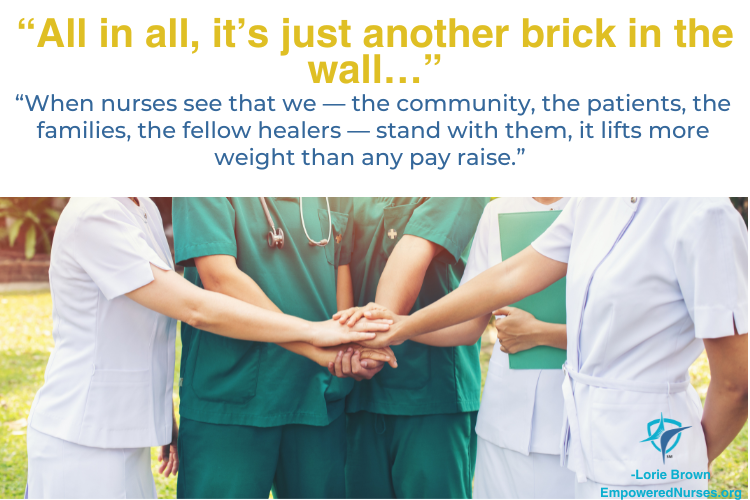
It may feel bleak. Yet here’s the secret: solidarity is a balm. When nurses see that we — the community, the patients, the families, the fellow healers — stand with them, it lifts more weight than any pay raise.
So today, I ask you: Stand. Don’t cross. Speak. Resist. Support. Because in doing so, you’re not just backing nurses — you’re defending the very heart of healthcare.
