


When Bureaucracy Turns Punitive: Nursing Board Overreach in Kansas
The Kansas State Board of Nursing (KSBN) is charged with protecting the public and ensuring the integrity of the nursing profession. But recent cases have raised serious concerns about whether that mission has been overshadowed by disproportionate and punitive actions toward nurses for administrative missteps. Two recent articles — one from nurse.org and another from The Kansas Reflector — have brought these stories into the public eye, prompting outrage from nurses, legislators, and the public.
Real People, Real Consequences
Amy Siple: 32 Years of Service, Career on Hold
In early 2024, nurse practitioner Amy Siple stepped away from her career to care for her husband, who had been diagnosed with metastatic prostate cancer. When she returned to work, she realized her license had lapsed. Her continuing education was complete, and no patients were harmed. Still, KSBN demanded she sign a consent order admitting to “unprofessional conduct” for practicing without a license. The penalty was not a warning or fine, but a disciplinary action that now jeopardizes her career and will be public record forever.
Ana Ahrens: A Renewal Error Turned Into Discipline
Psychiatric nurse practitioner and addiction counselor Ana Ahrens mistakenly renewed both her RN and APRN licenses twice. She was never notified of the duplication. Months later, a pharmacist told her patients couldn’t receive prescriptions because her license was listed as inactive. When she contacted KSBN to resolve the issue, she was met with an investigation and pressure to sign a consent order admitting unprofessional conduct. She described the process as “tyranny as a form of punishment.”
The Problem with This Approach
These are not cases involving patient harm, negligence, or misconduct. They are administrative errors — the kind that can happen to anyone working in a demanding profession with complex licensing requirements. Yet the consequences have been severe and life-changing, placing careers, livelihoods, and patient care at risk.
At an August 7, 2025, Kansas House Select Committee on Government Oversight hearing, legislators openly questioned the board’s approach. Some even suggested defunding KSBN or overhauling its procedures entirely. The central question was simple: Is this justice?
What Needs to Change
To rebuild trust and ensure fairness, several steps are necessary:
1. Proportional Discipline Reserve harsh penalties for serious violations involving harm or clear risk to the public. Administrative mistakes should be met with corrective action, not career-threatening discipline.
2. Clear and Timely Communication Notify licensees immediately when an error is detected, and give them a chance to correct it before opening a formal investigation.
3. Transparent Standards Clearly define what constitutes “unprofessional conduct” and ensure it is applied consistently and appropriately.
4. Paths to Resolution Offer remediation and education for minor mistakes rather than forced admissions of misconduct.
Why It Matters
Boards of nursing hold immense power over the careers of those they regulate. With that power comes a responsibility to balance public protection with fairness and due process. When that balance tips toward punishment for minor errors, the consequences ripple far beyond the nurse — impacting patients, families, and communities.
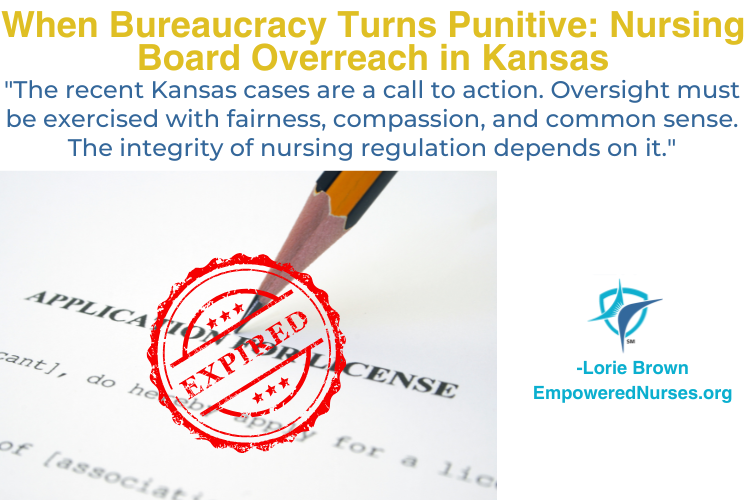
The recent Kansas cases are a call to action. Oversight must be exercised with fairness, compassion, and common sense. The integrity of nursing regulation depends on it.


Comments are closed