


Travel Nurses Saved the System — Now the System’s Failing Them

“We uprooted our lives for a promise. Then the rug was yanked out.”
That’s the story thousands of travel nurses are telling — and now, some are finally being heard in court. But the settlement is only a symptom. The real disease is deeper: contracts drying up, wages collapsing, and the trust fracture between nurses and agencies.
Let me pull back the curtain. Here’s what’s happening — and what every nurse, attorney, and advocate needs to see.
💰 The Settlement That Speaks Volumes
In a case against NuWest Group, over 2,300 travel nurses alleged that once they had relocated and started an assignment, the agency cut their pay, reclassified compensation to dodge overtime, and forced “take-it-or-leave-it” renegotiations.
Here are some of the chilling details:
· Some nurses saw 81% cuts to weekly stipends mid-contract.
· Base pay rate drops of 6% or more, after the nurse had committed to the assignment.
· The agency allegedly recategorized compensation (e.g. stipends) so they wouldn’t count toward overtime.
· Average settlement for affected nurses: ~$980. Some got over $9,000 (for the ones hardest hit)
· 123 nurses with documented claims got ~$3,000 each for the pay cut claims; the rest received smaller amounts. A federal judge approved the settlement as “fair, reasonable, and adequate.”
But that’s only one battle. The war is still raging.
⚠️ The Cracks We See — And Why They’re Widening
The settlement is an alarm bell. Here are the structural problems travel nurses are facing now — and no, they’re not anecdotal.
1. Contracts are drying up
Hospitals and health systems, squeezed by lower reimbursements, staffing fatigue, and shrinking margins, are cutting back on temporary staffing. Many facilities are favoring leaner permanent staffing or internal float pools. In some states, dozens of travel contracts have been canceled or allowed to expire without renewal.
2. Pay-slashing in mid-contract has become routine The “bait-and-switch” era is no longer shocking — it’s expected. Nurses report hourly rates being cut 25% to 70% after assignment start.
For example:
· One nurse started at $85/hour + stipends. A few weeks later, the rate was cut to ~$50. Then cut again.
· Nurses allege agencies reclassify portions of pay (stipends) so they don’t count for overtime.
3. Mandatory arbitration clauses trap nurses
Many contracts force disputes into arbitration, barring class actions. That’s a huge asymmetry: the agency has more leverage, resources, and legal heft.
Lawyers are fighting back, arguing that when the contract was procured fraudulently (i.e. misrepresenting pay, changing terms later), the arbitration clause may be unenforceable.
4. Demand is weaker — supply is shaken
During COVID-19, travel nurses were an emergency valve. Agencies paid top dollar. But that surge is contracting. Hospitals are pushing back on bill rates, some are minimizing use of premium staff, and many are prioritizing cost containment. Some decline in travel nurse demand is expected as permanent staffing stabilizes or alternative internal staffing strategies emerge.
5. Financial instability & uncertainty for nurses
Imagine uprooting your life — lease, travel, licensure, child care — and then having your contract slashed. That’s not just frustrating; it’s financially toxic.
Nurses report last paycheck issues, inconsistent communication, and a feeling of having been “preyed upon.”
💔 Why This Hurts Every Stakeholder
· For nurses: Loss of trust, financial risk, burnout, and the emotional toll of broken promises.
· For agencies: Reputation damage, litigation risk, and pressures to either absorb margin or pass costs to hospitals.
· For hospitals/patients: Staffing gaps, disruptions, and increased turnover costs.
· For the system: Erosion of a flexible workforce safety net precisely when shortages loom.
🔧 What Can (and Should) Be Done — From Your Nursing-Legal Lens
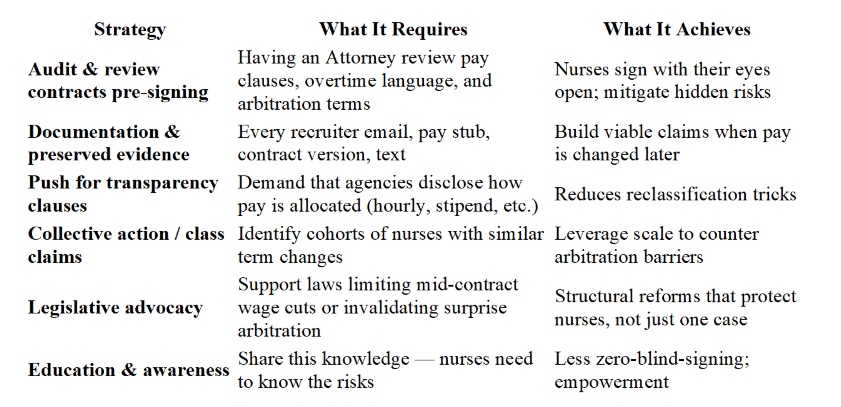
Because you and I both know: pointing fingers isn’t enough. Here are paths forward — and some strategic angles for legal nurse consultants to leverage:
🩺 A Nursing Analogy
Think of a patient you’ve cared for whose vital signs look stable — but hidden lab values are crashing. On the surface, everything looks okay. Then suddenly, the patient spirals. That’s what’s happening with the travel nursing industry: the surface (contracts, high pay) looked robust during COVID, but underneath, the systemic stress fractures are exposing deep wounds.
Travel nurses have been frontline in the health crisis. Now, some are frontlining to hold agencies accountable. Their fight is not just about pay — it’s about dignity, fairness, and the principle that no one should be forced to pay the price for broken promises.


Comments are closed