


When Exhaustion Turns Deadly: The Hidden Dangers of Night Shift Nursing
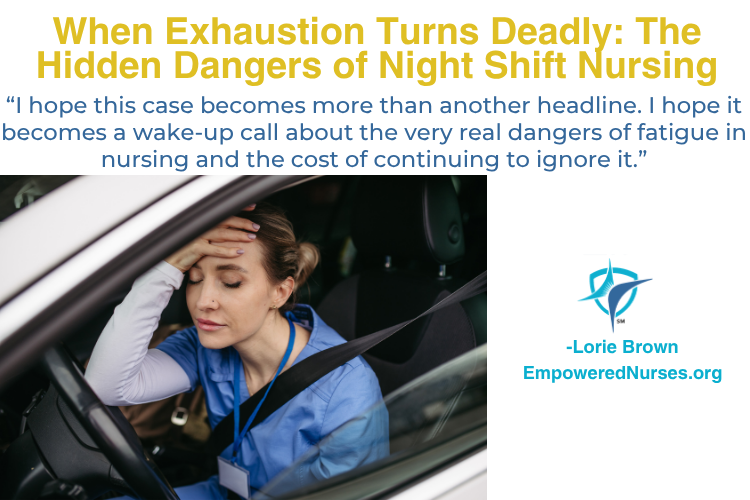
There are certain stories that stay with you long after you read them. This was one of them.
A 31-year-old emergency room nurse finished her overnight shift and began the drive home. Somewhere along that drive, exhaustion appears to have caught up with her. Three sheriff’s deputies lost their lives. A nurse now faces criminal charges. Multiple families woke up one morning expecting an ordinary day and instead had their entire futures shattered.
What makes this story so deeply unsettling is that there was no allegation of alcohol or drug use. According to reports, she was not texting. Investigators instead focused on something many nurses experience regularly but rarely talk about seriously enough: profound exhaustion after working nights.
I think about how many nurses have driven home after a shift feeling completely depleted. Not just tired, but disconnected. The kind of exhaustion where your thoughts feel delayed and your body is begging for sleep. So many nurses dismiss those moments because they have become part of the culture of healthcare. You work the shift. You push through. You get home somehow. Then you do it all again.
But this tragedy forces us to confront an uncomfortable reality. Fatigue is not harmless.
Healthcare has normalized a level of exhaustion that would raise alarm bells in almost any other profession. Nurses are expected to function through the night making critical decisions, responding to emergencies, managing high patient loads, and carrying enormous emotional pressure. Then, after twelve or thirteen hours, they climb into a car and drive home while their bodies are biologically fighting to shut down.
Research has repeatedly shown that prolonged wakefulness significantly impairs judgment, reaction time, and cognitive function. Studies comparing sleep deprivation to alcohol impairment found that being awake for extended periods can affect performance similarly to intoxication. Yet nurses do this routinely, often while being praised for their endurance.
There is also a human side to this conversation that often gets lost. Nurses frequently carry guilt for being tired, as though needing rest somehow reflects weakness or lack of dedication. It does not. No one can override biology indefinitely. The brain and body eventually demand payment for chronic sleep deprivation.
The tragedy in Florida also highlights how quickly lives can change in a single exhausted moment. Three deputies never made it home to their families. A nurse who dedicated her life to caring for others now faces consequences that will follow her forever. There are no winners in this story. Only loss.
What frustrates me is that healthcare systems often speak endlessly about patient safety while largely ignoring the dangers of nurse fatigue. Other professions have strict safeguards around hours and rest periods. Pilots do. Truck drivers do. Even medical residents have work-hour restrictions. Nurses, however, are still frequently expected to work excessive hours, flip schedules between days and nights, pick up overtime, and continue functioning at a high level regardless of physical exhaustion.
This cannot simply be viewed as an individual responsibility issue. Yes, nurses need to recognize when they are too exhausted to drive safely. But the larger system also has responsibility when chronic fatigue becomes so normalized that dangerous levels of exhaustion are treated like professionalism instead of a warning sign.
The conversation about nurse fatigue needs to move beyond jokes about caffeine, survival mode, and “just getting through it.” There is nothing funny about exhausted healthcare workers operating vehicles after overnight shifts while cognitively impaired from lack of sleep.
My heart breaks for every family involved in this tragedy and for the nurse. The nurse still has her license so far but now gets to face the criminal charge. I hope this case becomes more than another headline. I hope it becomes a wake-up call about the very real dangers of fatigue in nursing and the cost of continuing to ignore it.


Comments are closed