


Documentation Is Not Just a Nursing Task — It Tells the Patient’s Story
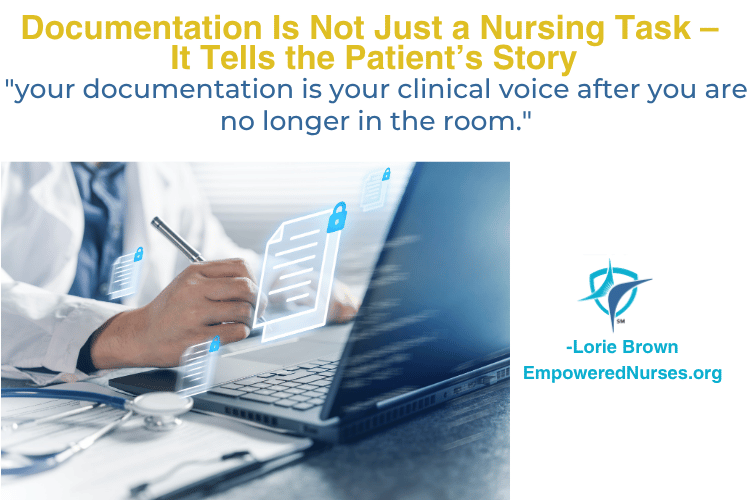
One of the most important lessons nurses can take from the Lindsay Clancy case is the extraordinary importance of documentation.
As nurses, we sometimes think of documentation as the part of the job that comes after the “real” nursing is finished. But documentation is part of patient care. The medical record may eventually become the only way someone who was not in the room can understand what was happening with that patient.
And years later, that “someone” could be another healthcare provider, an expert witness, an attorney, a Board of Nursing — or a jury.
When caring for a patient experiencing a mental health crisis, simply charting “patient denies SI/HI” may not tell the entire clinical story.
What else did you observe?
Was the patient sleeping? Was she eating? Was her behavior different from baseline? Did she appear anxious, fearful, confused, withdrawn or unusually agitated? Did she report intrusive or disturbing thoughts? What did her spouse or family tell you? Had she called several times that week? Had medications recently been started, stopped or changed? Was this her second or third request for help?
Those details matter because documentation should capture the clinical picture, not simply complete the required boxes in the electronic medical record.
Just as important, if a patient tells you something concerning, document what you did about it.
Who did you notify? When did you notify them? What information did you provide? What orders were received? What safety measures were implemented? Was the patient reassessed? Did you escalate the concern when the initial response did not address what you were seeing?
There is an enormous difference between documenting:
“Provider notified.”
and documenting the substance of the communication, the patient’s condition, the response received and the nursing interventions that followed.
There is another reason this matters.
Healthcare is fragmented. The nurse caring for the patient today may not be the nurse caring for her tomorrow. The psychiatrist may not know what the emergency department observed. The primary care provider may not know what the family told another clinician. Each person may have only one piece of the puzzle.
The medical record is where those pieces are supposed to come together.
That is why nurses should document changes and patterns, not just isolated events. If you recognize that today’s presentation is different from yesterday’s, say so. If the spouse reports that the patient has not slept for three nights, document it. If the patient makes a statement that concerns you, use her own words when appropriate rather than sanitizing the statement into vague clinical language.
Most importantly, never chart an assessment you did not perform.
Do not click through a template because “that’s what we always do.” Do not carry forward yesterday’s assessment without verifying that it remains accurate. Do not allow the electronic medical record to turn an evolving patient into a collection of checkboxes.
Because when something goes terribly wrong, the question may eventually become:
What did the healthcare team know, when did they know it, and what did they do about it?
The medical record may be the best evidence available to answer those questions.
As a nurse and an attorney, I cannot emphasize this enough: your documentation is your clinical voice after you are no longer in the room.
Make sure it tells the truth, tells the story and demonstrates your nursing judgment.


Comments are closed