


Violence Against Nurses Cannot Become “Part of the Job”
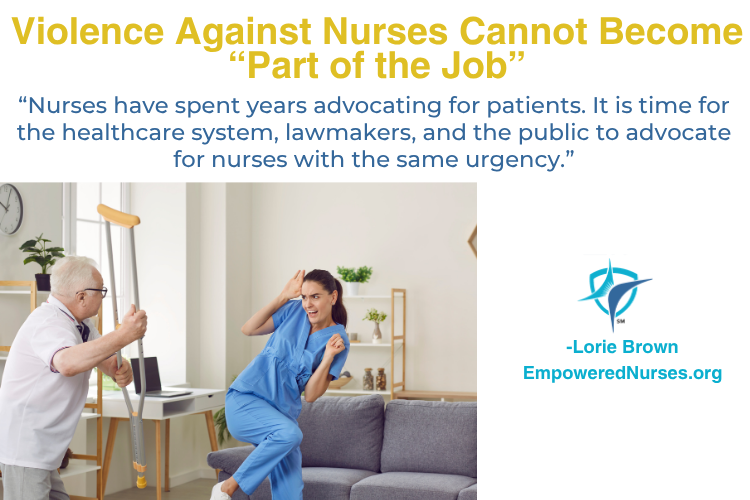
A nurse walks into work to care for people at some of the most vulnerable moments of their lives. She expects stress. She expects pressure. She expects difficult conversations. What she should never expect is to be punched, kicked, spit on, threatened, stalked, or sexually assaulted.
And yet, that has become the reality for far too many nurses across this country. A recent article in Chief Healthcare Executive highlighted what nurses have been saying for years: violence against healthcare workers has escalated to a crisis level, and leaders are now calling for federal protection because these attacks “can’t be normalized.”
The numbers are staggering. Nurse.org’s 2026 survey found that 27% of nurses reported being physically assaulted at work within the past year, while more than half experienced verbal threats or aggressive behavior. (Nurse.org) Emergency nurses, psychiatric nurses, telemetry nurses, and medical-surgical nurses reported some of the highest rates of violence. Many nurses described being hit, bitten, grabbed, threatened with weapons, or sexually harassed while simply trying to do their jobs. (Nurse.org)
What may be even more disturbing is how many nurses no longer report these incidents because they believe nothing will happen. (Nurse.org) Imagine working in an environment where being assaulted becomes so common that people stop expecting protection. That level of desensitization is dangerous not only for nurses, but for patients as well.
There is now growing momentum in Congress for federal legislation known as the Save Healthcare Workers Act, H.R. 3178. The proposed bill would create federal criminal penalties for assaulting healthcare workers, including nurses. Under the proposal, violent assaults could carry prison sentences of up to 10 years, and attacks involving weapons or serious bodily injury could result in penalties up to 20 years. The legislation would also provide funding for workplace violence prevention programs, security improvements, and de-escalation training. (The Nursing Directory) This is a great start but it does not prevent the problem. At one of the local hospitals in San Diego they actually posted a warning to patients to protect their employees.
Supporters argue that nurses deserve the same federal protections already given to airline crews and federal officers. Frankly, it is difficult to argue otherwise. Nurses enter unpredictable environments every day. They care for patients experiencing psychiatric crises, substance intoxication, dementia, trauma, grief, fear, and anger. But compassion should not require nurses to sacrifice their safety.
At the same time, many nurses and advocacy organizations believe criminal penalties alone are not enough. Some are also pushing for stronger staffing laws and workplace violence prevention standards. (https://www.investigatetv.com/) When units are dangerously understaffed, tensions escalate more quickly. Delays increase frustration. Nurses have less time to recognize warning
signs before situations spiral out of control. Safe staffing and workplace safety are deeply connected.
What can nurses do right now to support change?
First, nurses must stop minimizing violence. Being assaulted is not “just part of the job.” Every incident matters. Every threat matters. Every act of aggression should be documented and reported. The normalization of violence thrives in silence.
Second, nurses can support organizations advocating for legislative reform, including state nursing associations, the Emergency Nurses Association, and workplace safety coalitions that are actively lobbying for stronger protections. Nurses often underestimate the power of their collective voice. Legislators pay attention when healthcare professionals organize and speak publicly.
Third, nurses can contact their federal representatives and ask them to support legislation protecting healthcare workers. Many laws move because ordinary professionals refuse to stay quiet about unsafe conditions. https://www.house.gov and https://www.congress.gov/members/find-your-member
Fourth, healthcare organizations themselves must stop treating violence as inevitable. Hospitals and facilities should invest in security, reporting systems, de-escalation training, panic buttons, visitor management protocols, and post-incident support for staff. A nurse who is assaulted should not be expected to finish charting and move on as though nothing happened.
This issue is bigger than workplace frustration. It is about dignity. It is about safety. It is about whether society believes the people caring for us deserve protection themselves.
Nurses have spent years advocating for patients. It is time for the healthcare system, lawmakers, and the public to advocate for nurses with the same urgency. Because when violence becomes routine in healthcare, everybody loses.


Comments are closed