


The Scope of Practice of the Registered Nurse in Esthetic Care
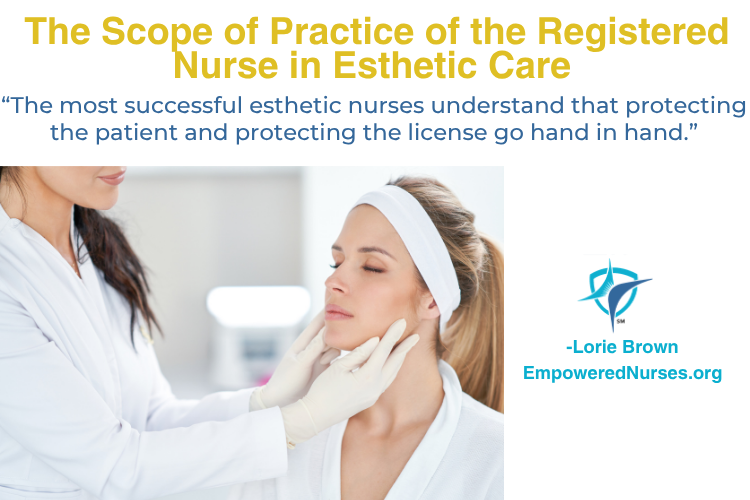
The world of esthetic nursing has exploded in recent years. From Botox and dermal fillers to laser procedures, IV hydration, skin rejuvenation, and body contouring, nurses are increasingly stepping into spaces that blend healthcare, wellness, and aesthetics. Yet as the industry grows, so do the legal, ethical, and professional questions surrounding what a registered nurse can and cannot do.
Many nurses enter esthetics because they are seeking flexibility, creativity, autonomy, and freedom from the pressures of traditional bedside care. However, esthetic nursing is still nursing. A cosmetic setting does not erase the obligations of licensure, patient safety, standards of care, or professional accountability. An RN’s license follows them into every med spa, plastic surgery office, wellness clinic, and esthetic practice they enter.
According to the American Nurses Association (“ANA”), scope of practice defines the “who, what, where, when, why, and how” of nursing practice. (ANA) The ANA emphasizes that nursing practice is not determined solely by employer preference or physician delegation. Instead, scope of practice is determined by state nurse practice acts, regulatory boards, education, competency, training, experience, and adherence to professional standards. (ANA)
This becomes critically important in esthetics because many procedures marketed as “simple beauty treatments” are, in reality, medical procedures carrying significant risk. Complications from injections, lasers, sedation, and IV therapies can include vascular occlusion, burns, infection, blindness, anaphylaxis, stroke, tissue necrosis, and death. The clinical environment may look glamorous on social media, but nursing boards and courts evaluate these cases through the lens of patient safety and professional accountability.
The International Society of Plastic and Aesthetic Nurses (“ISPAN”) addressed these concerns in Plastic and Aesthetic Nursing: Scope and Standards of Practice (2021). ISPAN recognizes esthetic nursing as a specialty practice requiring specialized knowledge, skill, training, and competency. (pages.nursingworld.org) The standards emphasize that plastic and aesthetic nurses must adhere to all local, state, and federal laws governing nursing practice and must practice only within the boundaries of their education and demonstrated competence. (pages.nursingworld.org)
One of the most important principles from both ANA and ISPAN is that competency is not assumed merely because a physician is present or willing to delegate. A physician cannot magically expand a nurse’s legal scope of practice. Even when procedures are delegated, the RN remains individually accountable for determining whether they possess the education, training, clinical judgment, and competence necessary to safely perform the task.
ISPAN specifically notes that aesthetic nurses should use the RN Scope of Practice Decision Tree when evaluating whether a procedure falls within appropriate nursing practice. This means the RN should ask:
· Is the activity permitted under state law?
· Has the nurse received appropriate education and training?
· Is the nurse competent to perform the procedure safely?
· Are there policies, protocols, and medical oversight in place?
· Would a reasonably prudent nurse with similar training perform this procedure?
If the answer to any of these questions is uncertain, the nurse may be operating outside safe professional boundaries.
The ANA standards also emphasize assessment, planning, implementation, evaluation, ethics, advocacy, and evidence-based practice. In esthetic nursing, this means the RN’s responsibilities extend far beyond simply “doing injections.” A competent esthetic RN must assess the patient for contraindications, review medical history, recognize complications, provide informed education, maintain documentation, understand emergency protocols, and intervene appropriately when adverse outcomes occur.
This is particularly important because many med spas operate with blurred lines between medicine and retail sales. Nurses may feel pressure to upsell treatments, delegate improperly, minimize complications, or prioritize profitability over patient safety. ISPAN directly addresses these ethical concerns, warning against misleading advertising, conflicts of interest, and financial influences that compromise patient care.
Social media has also created substantial risk for esthetic nurses. Before-and-after photos, procedure videos, influencer marketing, and online testimonials can easily cross ethical and legal boundaries. ISPAN specifically cautions nurses regarding confidentiality, consent, photography, and inappropriate social media use. Even a well-intentioned Instagram post can trigger HIPAA concerns, board investigations, or allegations of unprofessional conduct.
Another major issue is supervision and delegation. Many states have varying rules regarding whether an RN may independently perform injections, laser procedures, microneedling, or IV therapies. Some procedures may require direct physician supervision, while others may only be performed by advanced practice nurses or physicians. The fact that a procedure is commonly performed in a med spa does not automatically make it legally permissible for every RN in every state.
This is where nurses can become vulnerable. Many nurses assume, “If my employer allows it, it must be legal.” Unfortunately, nursing boards do not accept that defense. When complications occur, the board examines whether the nurse independently understood the applicable laws, standards, competency requirements, and patient safety obligations.
The ANA and ISPAN standards make clear that the RN’s duty is first and foremost to the patient. That includes speaking up when practices appear unsafe, refusing assignments outside one’s competency, maintaining ongoing education, and recognizing the limits of one’s licensure.
Esthetic nursing can be an exciting and rewarding field. It allows nurses to combine science, artistry, patient relationships, and entrepreneurship in powerful ways. But it is not a shortcut around nursing standards. A syringe filled with filler is still a medical intervention. A laser is still a medical device. A med spa is still a healthcare environment.
The most successful esthetic nurses understand that protecting the patient and protecting the license go hand in hand. Just as a skilled injector studies facial anatomy, a wise nurse studies scope of practice with equal precision. One protects the patient’s face. The other protects the nurse’s future.


Comments are closed